
Financial literacy is understanding and effectively using financial skills. It is a crucial life skill and it includes understanding and managing money. This article explores why financial literacy remains low and how it could be improved.
Financial literacy is crucial as it can help avoid debt. Without proper financial education, individuals can fall into traps such as high interest loans and payday loans without knowing the real purpose of it. Financial literacy can help individuals avoid stress. This is because they can manage bills and payments in a safe and efficient way. Lastly, financial literacy can help students understand about the different financial products and services there are such as student loans and credit cards. Knowing about these can give students financial support when needed and learning about them can help students use them manageably.
Financial literacy is so poor despite many efforts to help students learn by using approaches such as apps and videos. One reason why financial literacy is so poor is because schools spend limited time teaching about financial literacy. The systems focus on traditional subjects such as Maths and English and not much about financial literacy. Another reason why financial literacy is so poor is because many young people rely on their parents for financial guidance and knowledge. However, their parents may not educate them on this or may not even have an understanding of financial literacy themselves. Lastly, many young individuals view investing as complicated which results in them avoiding the subject entirely.
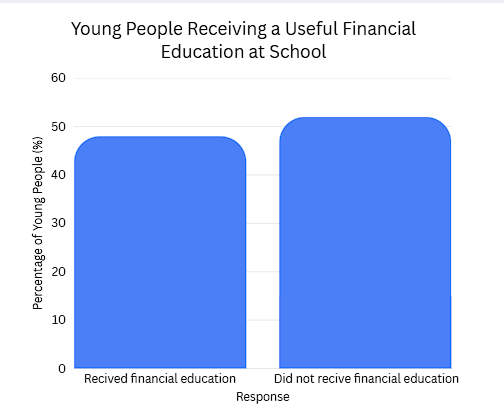
Figure 1: The graph above shows that only one-third of young people recall receiving a useful financial education at school.
Low financial literacy is often linked to debt, overspending, low savings, poor credit scores, missed investment opportunities, and increased financial stress. Financial literacy is crucial for young people to learn so once they leave school they are able to be independent and know the services they can access. Furthermore, financial literacy can help young people save and gain money through compound interest. Compound interest is important as it can build wealth slowly and beat inflation.
There are many ways to introduce financial literacy to young people. The most impactful way is by changing the school curriculum. Students should be able to have lessons regularly teaching the factors of financial literacy and how they can save, spend and invest in a manageable way. Furthermore, students should be encouraged more to open up kids accounts with banks. These accounts are a great and safe way to spend and save. Lastly, parents should be teaching their kids about financial products such as credit and debit cards as well as the different financial accounts.
Overall, financial literacy should be seen as a life skill rather than an optional topic. Governments should try to implement financial lessons in curriculums and banks should be more encouraging of young people using their services.
References & Further Reading
- Money and Pensions Service (MaPS) – UK Children and Young People’s Financial Wellbeing Survey: Financial Foundations (2023). Used for Figure 1 and the finding that only 33% of young people recall receiving useful financial education at school.
- Money and Pensions Service (MaPS) – Developing Children and Young People’s Financial Capability: Evidence Review (2023). Used to support the discussion on why financial education improves money management, confidence and saving behaviour.
- Financial Conduct Authority (FCA) – Financial Lives Survey. Used for background research on financial capability, debt, saving habits and financial wellbeing in the UK.
- MoneyHelper – Used for guidance on budgeting, saving, borrowing, credit cards and debt management.
- Young Enterprise – Used for research on financial education in schools and developing financial capability among young people.
- Bank of England – Used for background information on inflation, interest rates and the importance of compound interest in personal finance.
- GOV.UK – National Curriculum (England) – Used to understand how financial education is incorporated into the school curriculum.
- Office for National Statistics (ONS) – Used for supporting economic statistics relating to household finances and savings.
- Pexels – Photo by Olia Danilevich – Hero image for the article.