
Small and medium-sized enterprises (SMEs) make up over 99% of UK businesses meaning they play a crucial part in the UK economy. This article shows the support implemented to aid small businesses.
A Small and medium sized enterprise (SME) is a business that is independently owned and falls below certain limits such as less than 250 staff and annual revenue. SMEs are crucial to the economy as they bring in new ideas and products to countries. SMEs are the biggest employers in most countries, usually accounting for around 60% to 70% of all jobs.
Access to finance allows small businesses to secure vital capital through dedicated state-backed initiatives. The UK business bank is the government economic development bank and fixes any gaps in the market by giving alternative finance routes to small companies. They offer startup loans up to £25 000. They also have a scheme which provides lenders with a 70% state guarantee on commercial property up to £2 million pounds. This scheme is called Growth Guaranteed scheme and supports scaling businesses by providing a contingency.
The UK tax and policies for small businesses have said to “simultaneously protect and hurt” small and medium-sized enterprises. The low 19% Corporation Tax rate and Business Rates Relief actively support small firms by protecting their profits. In contrast the National Insurance increase is said to severely damage SMEs by forcing them to increase pay of employees. Overall the rise in employment costs is larger than the tax savings making the UK tax and policies unfair.
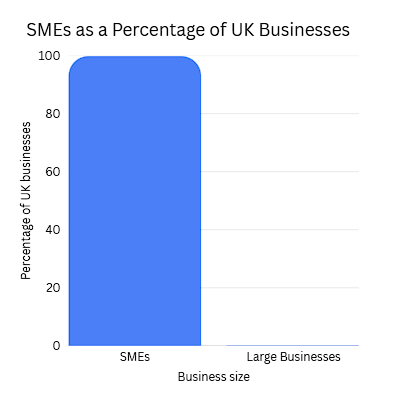
Figure 1: The graph above shows that SMEs account for over 99% of all UK businesses, highlighting their importance to the UK economy.
SMEs face major challenges, despite government support due to barriers to entry as well as economic events such as recessions. Inflation has a major impact on SMEs with low consumer spending, and rise in raw materials decreasing profit margins. High energy costs can also increase operational costs meaning SMEs can lose capital and make less profit. Banks may find it harder to lend and may block business loans.
Overall, the government has implemented major support schemes to aid businesses especially during recessions for example the covid 19 recession. However, government policies such as rising labour costs question whether the government support is sufficient enough to pay labour and tax while making a profit.
Department for Business and Trade – Business Population Estimates for the UK (2025). Used for SME statistics, including the finding that SMEs account for over 99% of UK businesses.
British Business Bank – Information on Start Up Loans, the Growth Guarantee Scheme and government-backed finance for SMEs. The Growth Guarantee Scheme provides lenders with a 70% government guarantee on eligible lending.
GOV.UK – Government guidance on support available to small businesses, taxation and business rates.
HM Treasury – Fiscal policy, corporation tax and measures affecting businesses.
Office for National Statistics (ONS) – UK business and economic statistics.
Federation of Small Businesses (FSB) – Research into the challenges facing SMEs, including finance, inflation and labour costs.
Office for Budget Responsibility (OBR) – Economic forecasts and analysis of the UK’s fiscal outlook.
Photo by Tim Mossholder on Unsplash – Hero image.